Saturday, October 31, 2009
Saturday, October 17, 2009
Time Piece

Nothing on the windowsill in my aunt's bedroom
but this faceless mantel clock: a boxed porthole
looking straight through itself to capture a round
of net-curtained window. Where did I see it last –
on the upright piano? Why did she move it here?
And where did the face go? I could ask, but don't,
the time being perfectly kept.
Dream Vertigo

Alarming dream last night. I was in a jeep with an old friend of mine, R, who was driving up a steep, slushy, slippery incline. I looked up and suddenly realised where we were headed, towards the distant crest of a mountain, the road as straight as a ski-jump, becoming vertical towards the top. I asked to be let out and he obliged. Then I watched as he continued to race up the mountain, till he skidded and stalled and came sliding backwards, rocketing past me to fly off the edge of a cliff, at which point I jolted awake. I must give R a call.
Labels: "bad dream", vertigo
Saturday, October 03, 2009
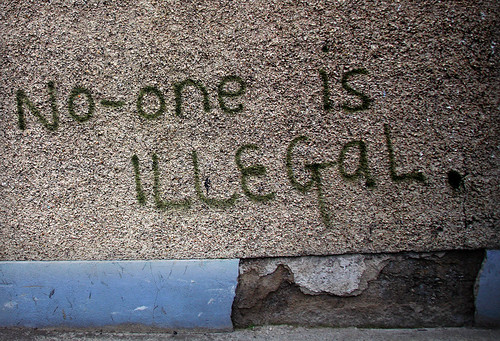
No More Totem Nos

... and then I asked him with my eyes to ask again no and then he asked me would I no to say no my mountain flower and first I put my arms around him no and drew him down to me so he could feel my breasts all perfume no and his heart was going like mad and no I said no I won't No.
My country has finally copped on (no thanks to Cowen & Co). There are times when it is preferable, if not desirable, to be a yes woman/man.
Labels: "Lisbon vote", "vote no to no", bloody maybe alright?, Father Pat Noise, Lisbon, yes
Saturday, September 19, 2009
Spot of Dying

Conversation between my wife and our five year old son:
Son: Mummy I don't want to die.
Mother: Neither do I.
Son: But you get to choose when you die.
Mother: Really? How do you do that?
Son: You go to the dying spot and jump in.
Death has been on his mind recently. Of course, we have explained already that he won't die, not for a long, long, looooong time, that he's safe, we're safe, etc. Nevertheless, death resurfaces, bobbing into the conversational slipstream at odd moments. What probably brought it up today was the fact that I had let slip that I'd attended a 'removal' yesterday evening, a septuagenarian relation of ours, who contracted cancer of the liver and was gone in eight months: a kindly man, 'a gentleman', as people noted.
If we were religious, we would have been quick to reassure our son (largely the whole point of religions) that he will never die, not really, and that his parents will no doubt be waiting for him when he eventually does die, having wiped our feet on Heaven's welcome mat and joined the party; as Donne so eloquently (and comfortingly) put it: 'One short sleep past, we wake eternally, / And death shall be no more; Death, thou shalt die.'
But neither of us is religious. My wife is cheerily atheist and I am strongly inclined that way (though hedging my bets behind an all-but-hopeless agnosticism). My gut tells me there is nothing afterward, nothing but our cheerless, time-leased apartment in nothingness, the same infinitesimal/enormous place the galaxies are speeding to. So it is a little chilling to hear the d-word being shaped by a five-year-old's lips. But it is also, I believe, natural, and rather healthy. His 'dying spot' could hardly have anything to do with suicide, a concept we have never discussed. It is far more likely what my wife suggests: a way of exerting control over something which he is, some day, in danger of being controlled by. He is right to be indignant, even appalled. But he knows he is well-loved, and I trust it is this (and the assurance that he is here and now, in the infinitely present present) which will allow him to deflate death and stow it in its proper place, for now.
Labels: dying, nothingness, talking to children about death, why don't you cheer the fuck up
Friday, September 11, 2009
At The Butcher's In Colmenar
A framed, blown-up photograph hangs on the wall:
the t-shirted butcher’s son and his wife, on their honeymoon
in Manhattan, the towers in the background, the date:
September 10, 2001.
Behind the counter, a steel door opens: a glimpse
of pale waxy carcasses, smell so thick I could colour it
black-red: the colour of history. Outside, I breathe
warm streets, damp from a recent shower.
An old man swings past on crutches. What do I know
about history? Dawdling under a nearby orange tree –
its perfect glimmering system – I think
of reaching to pluck one.
Andalucía, 2004
(from my third collection, Fade Street, forthcoming from Salt in 2010)
This did not begin as a '9/11 poem'. I only really started to think of it in such a context after it was published in The Irish Times last Saturday.
It took me well over five years to finish it. As far as I can recall, I began to make notes, the first sketchy drafts, not long after leaving that butcher's shop, probably the same afternoon. I think what I was trying to get at, initially, were sensations, the texture and colour, particularly the overwhelming smell inside the butcher's . Incidentally, that butcher is highly respected, and his meat is of the best quality; the smell wasn't one of rottenness, but rather of fresh, visceral meatiness (an early image was of finding myself inside a 'meat tent'). I wanted to contrast this with the orange trees on the street outside, which had also made an impression on me.
The big framed photograph on the wall (which my cousin David had pointed out) was an otherwise fairly innocuous tourist snap, made remarkable because of the date, clearly printed in a panel below the image. The photograph may have featured in early drafts, but only in passing; the gist had been largely about the experience of finding myself in a foreign place, the oddness of real oranges growing, unplucked, on trees. That sense of dislocation is ground I (and of course many lyric poets) have covered before, and this time it ended in a cul-de-sac; the poem traveled into nowheresville and got set aside, if not quite abandoned.
Then I took it up again, a couple of years ago, and put it through another series of drafts, eventually focusing more on the photograph, which is now in the opening line (it took me years to realise its importance). Now the poem seems to have found its shape: three simple quatrains, just short of a sonnet, each shifting the location a little bit. I like the fact that an element of that uncertainty, that at-a-lossness, survives from the early drafts. It belongs in there. This is far from being a complex poem, but I think it just might contain something of that blurred little zone of almost-mystery, what Heaney called 'a hole', somewhere inside it. At least, I hope it does.
the t-shirted butcher’s son and his wife, on their honeymoon
in Manhattan, the towers in the background, the date:
September 10, 2001.
Behind the counter, a steel door opens: a glimpse
of pale waxy carcasses, smell so thick I could colour it
black-red: the colour of history. Outside, I breathe
warm streets, damp from a recent shower.
An old man swings past on crutches. What do I know
about history? Dawdling under a nearby orange tree –
its perfect glimmering system – I think
of reaching to pluck one.
Andalucía, 2004
(from my third collection, Fade Street, forthcoming from Salt in 2010)
This did not begin as a '9/11 poem'. I only really started to think of it in such a context after it was published in The Irish Times last Saturday.
It took me well over five years to finish it. As far as I can recall, I began to make notes, the first sketchy drafts, not long after leaving that butcher's shop, probably the same afternoon. I think what I was trying to get at, initially, were sensations, the texture and colour, particularly the overwhelming smell inside the butcher's . Incidentally, that butcher is highly respected, and his meat is of the best quality; the smell wasn't one of rottenness, but rather of fresh, visceral meatiness (an early image was of finding myself inside a 'meat tent'). I wanted to contrast this with the orange trees on the street outside, which had also made an impression on me.
The big framed photograph on the wall (which my cousin David had pointed out) was an otherwise fairly innocuous tourist snap, made remarkable because of the date, clearly printed in a panel below the image. The photograph may have featured in early drafts, but only in passing; the gist had been largely about the experience of finding myself in a foreign place, the oddness of real oranges growing, unplucked, on trees. That sense of dislocation is ground I (and of course many lyric poets) have covered before, and this time it ended in a cul-de-sac; the poem traveled into nowheresville and got set aside, if not quite abandoned.
Then I took it up again, a couple of years ago, and put it through another series of drafts, eventually focusing more on the photograph, which is now in the opening line (it took me years to realise its importance). Now the poem seems to have found its shape: three simple quatrains, just short of a sonnet, each shifting the location a little bit. I like the fact that an element of that uncertainty, that at-a-lossness, survives from the early drafts. It belongs in there. This is far from being a complex poem, but I think it just might contain something of that blurred little zone of almost-mystery, what Heaney called 'a hole', somewhere inside it. At least, I hope it does.
Labels: 9/11, Andalucía, Clomenar, September 11, Southern Spain, twin towers
Sunday, August 30, 2009
My Failed Career
as a cartoonist.

In the mid 1980s I sent this in to a magazine, where my girlfriend, who had recently broken it off with me, was working. She wasn't on the editorial board, so I hadn't addressed it to her. Anyway, they rejected it, as I imagined they probably would (my first effort, after all). She rang me about a week later, to ask if we could meet. This got my hopes up. Perhaps she wanted a reconciliation (the cartoon was the furthest thing from my mind). No, she wanted to know how I could be nasty enough to send in such a thing. What did I think I was playing at? I was mystified, almost speechless. Surely, if anything, it was aimed at men, perhaps even myself. Had I missed some vital clue, broken some grave protocol?
Eventually, she admitted that it was a fairly accurate portrait... of her current boyfriend. I had heard rumors about her seeing someone. I knew him to speak to, but not nearly well enough to make assumptions about his character. Even if I had, I would never have presumed to parody him (utterly pathetic, someone slagging, without provocation, his ex-lover's lover). Furthermore, he certainly didn't look like the John Travolta wannabe in my drawing; if anything, his attire was the opposite: permanent student-drab, rather like myself. I burst out laughing, and continued till my ex asked me to shut up.
I was stupid, of course. A satirical cartoon, sent to an ex-lover's workplace, is going to damn well look like some kind of message, no matter how obscure or unlikely. And, as luck would have it, this one didn't seem obscure at all.
We've had a friendly enough relationship since, though we rarely meet (she doesn't live in the neighborhood any longer). I hope if she ever reads this she'll forgive me for airing it. I believe the joke was on both, or perhaps all three, of us.

In the mid 1980s I sent this in to a magazine, where my girlfriend, who had recently broken it off with me, was working. She wasn't on the editorial board, so I hadn't addressed it to her. Anyway, they rejected it, as I imagined they probably would (my first effort, after all). She rang me about a week later, to ask if we could meet. This got my hopes up. Perhaps she wanted a reconciliation (the cartoon was the furthest thing from my mind). No, she wanted to know how I could be nasty enough to send in such a thing. What did I think I was playing at? I was mystified, almost speechless. Surely, if anything, it was aimed at men, perhaps even myself. Had I missed some vital clue, broken some grave protocol?
Eventually, she admitted that it was a fairly accurate portrait... of her current boyfriend. I had heard rumors about her seeing someone. I knew him to speak to, but not nearly well enough to make assumptions about his character. Even if I had, I would never have presumed to parody him (utterly pathetic, someone slagging, without provocation, his ex-lover's lover). Furthermore, he certainly didn't look like the John Travolta wannabe in my drawing; if anything, his attire was the opposite: permanent student-drab, rather like myself. I burst out laughing, and continued till my ex asked me to shut up.
I was stupid, of course. A satirical cartoon, sent to an ex-lover's workplace, is going to damn well look like some kind of message, no matter how obscure or unlikely. And, as luck would have it, this one didn't seem obscure at all.
We've had a friendly enough relationship since, though we rarely meet (she doesn't live in the neighborhood any longer). I hope if she ever reads this she'll forgive me for airing it. I believe the joke was on both, or perhaps all three, of us.
Sunday, August 23, 2009
Pottery-Cloud

Wordle.net is a website that generates 'word-clouds'. That is, it takes whatever bunch of text you want to dump in it and turns this into a randomly arranged graphic word-picture. More interestingly, rather than using all the words in your text, it sorts out the less interesting chaff (definite articles, and, a, etc.) then, for the remainder, "uses the number of times a word appears in a text to determine its relative size." So you get a snapshot of how often you've used (or overused) a particular word. Sometimes this can be misleading; I altered my text (the MS of my latest poetry collection) when I realised that 'James Joyce' was one of the largest words, which would have given the impression that I had written a series of odes to the master, while in fact the name was simply repeated in one small poem.
If you don't like the fonts/colours or whatever you can get another design by simply clicking the 'randomize' button. So I tried a few till I found this. I like the colour and design, but most of all the random 'poem' top left: little Ghost / called Life
You can then exhibit these little concoctions in the online gallery or on your blog (the instructions are in the FAQs).
So how about that? Properly postmodern randomness, DIY "visual poems" far better than those I've come across.