Blogroll

Showing posts with label Anthony Glavin. Show all posts

Saturday, January 27, 2007

What One Note Holds: The Short Poem


How short can a poem be, if it is to remain a poem? The Scottish poet and artist Ian Hamilton Finlay wrote a series of one-word poems (though the titles were often considerably longer). There are poems with no content, only titles, such as Don Paterson's 'On Going to Meet a Zen Master in the Kyushu Mountains and Not Finding Him', or James Wright's 'In Memory of the Horse David, Who Ate One of My Poems'.

I like those two, but often the 'litty' combination of brevity and levity falls far short of the mark set by the best comedians. Take Woody Allen's 'Eternal nothingness is fine if you happen to be dressed for it' or 'I am at two with nature'. Then there's Groucho Marx's delightfully surreal 'Outside of a dog a book is a man's best friend. Inside of a dog it's too dark to read.'

Essentially, very short poems are not that different from other kinds; they work (or fail to work) for much the same reasons longer poems do. So a short poem, like any other, isn't a poem when it is ONLY a set-up for a punch line, a sentimental platitude or a statement (political or otherwise) that would be better served in prose.

But what should one make of the following?

IMAGE

Old houses were scaffolding once
and workmen whistling.

Some would dispute that T.E. Hulme's couplet is in fact a poem. I think it is (and so did Larkin apparently, who included it in his Oxford anthology). For me, the poem manages a kind of magic, a cinematic, reverse-time-lapse effect, running history backwards, undressing all those gaunt, respectable old houses we've seen and momentarily wondered about, leaving civilization without its facade, but with a cocky, human note, almost the air of a song. Hulme wrote little poetry (his Complete Poetical Works when it was published in The New Age in 1912 consisted of five poems); so it is remarkable that he is acknowledged as the founder of the Imagist Movement, which had such an important influence on Pound.

Many approximations of haiku, tanka, epigrams etc. have as much substance as soap bubbles, and none of the buoyancy. But when very short lyrics work they can trigger what Tobias Wolff might call 'synaptic lightning', allowing the reader to enter a space as startlingly expansive as the interior of Dr. Who's Tardis. Pound has some fine examples, such as his 'And the days are not full enough':


And the days are not full enough
And the nights are not full enough
And life slips by like a field mouse
      Not shaking the grass


The kind of short poems that interest me are usually those with strikingly effective imagery, though there are exceptions, such as Oppen's 'There is the one word...'.

I've been reading Kuno Meyer's recently reissued 'Ancient Irish Poetry', which has a number of epigrams and short poems. Here's his translation of an anonymous poem from the 9th Century:

THE VIKING TERROR

Bitter is the wind tonight.
It tosses the ocean's white hair.
Tonight I fear not the fierce warriors of Norway
Coursing on the Irish Sea.


D.H. Lawrence wrote some memorable short lyrics. I took out my hefty Penguin edition of his Complete Poems, thinking I might discover many that were new to me (or that I had forgotten). I was a little disappointed to find only a few more short poems that held together for me, and to realise that many were rather dull. But I also came across some interesting things. The first paragraph of his introduction to his 1929 book, ‘Pansies’, is worth quoting:

“These poems are called ‘Pansies’ because they are rather ‘Pensées’ than anything else. Pascal or La Bruyère wrote their ‘Pensées’ in prose, but it has always seemed to me that a real thought, a single thought, not an argument, can only exist easily in verse, or in some poetic form. There is a didactic element about prose thoughts which makes them repellent, slightly bullying… We don’t want to be nagged at.”

Indeed; few people desire to be nagged at, or to read nagging poems. Lawrence wrote some remarkable poetry, especially about animals and plants. But he had very definite, often irritable and dogmatic, ideas about many things. Too often, the short poems are bursts of invective, flak from some war he seemed to be engaged in with certain kinds of English women and men; many amount to little more than framed Opinions. He acknowledges as much himself in the second paragraph:

“So I should wish these ‘Pansies’ to be taken as thoughts rather than anything else; casual thoughts that are true while they are true and irrelevant when the mood and circumstance changes. I should like them to be as fleeting as pansies, which wilt so soon, and are so fascinating with their varied faces.”

The weaker poems in ‘Pansies’ (and in Lawrence’s ‘Complete Poems’) are probably true enough to their time, though hardly less didactic or bullying than equivalent prose thoughts, and likely more pretentious. But the best of Lawrence’s short poems, just a couple of handfuls, are more than casual thoughts; these are perpetually fresh, classics of the genre.

So here is my nosegay:

THE WHITE HORSE

The youth walks up to the white horse, to put its halter on
and the horse looks at him in silence.
They are so silent, they are in another world.


THE RAINBOW

Even the rainbow has a body
made of the drizzling rain
and is an architecture of glistening atoms
built up, built up
yet you can't lay your hand on it,
nay, not even your mind.


SEA-WEED

Sea-weed sways and sways and swirls
as if swaying were its form of stillness;
and if it flushes against fierce rock
it slips over it as shadows do, without hurting itself.


NIGHT

Now that the night is here
A new thing comes to pass, eyes close
And the animals curl down on the dear earth, to sleep.
But the limbs of man long to fold and close upon the living body
of another human being
In shut-eyed touch.


NOTHING TO SAVE

There is nothing to save, now all is lost,
but a tiny core of stillness in the heart
like the eye of a violet.


LIZARD

A lizard ran out on a rock and looked up, listening
no doubt to the sounding of the spheres.
And what a dandy fellow! the right toss of a chin for you
and swirl of a tail!

If men were as much men as lizards are lizards
they’d be worth looking at.


NON-EXISTENCE

We don't exist unless we are deeply and sensually in touch
with that which can be touched but not known.


RELATIVITY

I like relativity and quantum theories
because I don't understand them
and they make me feel as if space shifted about like
a swan that can't settle,
refusing to sit still and be measured;
and as if the atom were an impulsive thing
always changing its mind.


LITTLE FISH

The tiny fish enjoy themselves
in the sea.
Quick little splinters of life,
their little lives are fun to them
in the sea.


Contemporary poets continue to be fascinated with making less more. Longley is obsessed with the short, imagistic lyric, and has written some memorable ones, Mahon too, and Heaney ('The dotted line my father's ashplant made...'). Muldoon's CRADEL SONG FOR ASHER is perhaps one of the greatest short lyrics of the century.

I've already written in an earlier blog about my recently deceased friend Anthony Glavin, who spent a couple of decades working on a long sequence of stunning 4-line poems, 'Living In Hiroshima'. If you're interested in seeing just how much it is possible to pack into such a small form, click on my entry for December 2006 and scroll down.

Here are four of my own shorter poems, the first two, DREAM ON and LIGHTBOX, are from my new collection, ‘The Sky Road’ (due from Salmon in April 2007). A 'lightbox' (from which I took the name of my blog), also called a roofbox, is the name given to the rectangular stone fanlight above the entrance to Megalithic passage tombs at Newgrange and elsewhere, angled to allow the rays of the sun to penetrate to the heart of the tomb.

The third poem, VANISHING POINT, is from my first book, 'Airborne':


DREAM ON

That little seal
of ownership, your fingerprint
on this mug of cold tea, after you're gone.


LIGHTBOX
(Newgrange)

Everyone should have one
dark hub for the dull day’s orbit:

stoneshouldered wings
where you bury the bones

of belief, and the redfaced sun,
to gain entrance, turns

a skeleton key.


VANISHING POINT

Simply staring
into the space ahead
is not enough; there is
the traffic of eyes to be met.


DARK MUTTER

Everything tends
to its own ends.


And my own haiku joke:

HAIKUISH

Haikush
Hash –
Ha
!

And finally, two from my recent collection, 'Fade Street', including my only one-line poem (or monostich):

NIGHT, WIND, DEAD LEAVES

rattle and hiss, the sound so high
it is almost a whistle,

their bodying sigh
the air of something more palpable

than passing by.


GHOST STORY

'Listen hard enough and you wake the dead.'

Monday, December 04, 2006

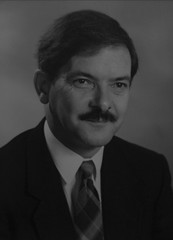
Anthony Glavin: 1945 – 2006

Poet, music teacher, friend, mentor, bright spirit.

Antthony

One of the brightest lights in my life, my friend Anthony Glavin, died on Tuesday 14th November after many years of suffering with emphysema. He was 61. The following week I put together an obituary with the help of his friends and family, particularly his sister Irene (she and her husband Mike, were Anthony’s primary carers). Below is an edited version of the obit, followed by further details and personal reminiscences about his life and work.

Anthony Glavin, who died at the age of 61 in the Mater Hospital, was a poet and Professor of Music at The Royal Irish Academy. He was born in Dublin on August 7th 1945 to Kathleen and James J. Glavin. Anthony’s father fought in The War of Independence and later went on to work for the Irish Sugar Co. (Comhlucht Siúicre Eireann, Teoranta) till he retired in 1971.

Anthony was educated at Scoil Uí Chonaill, North Circular Road, where he excelled at drama and music, eventually studying at The Royal Irish Academy where Dina Copeman was his tutor. He regularly entered the yearly Feis Ceol and came first many times, competing with musicians such as John O’Conor and Micheál Ó Ruairc. Each year he played one of the lead parts in the school’s production of Gilbert and Sullivan.

After leaving school Anthony studied at University College Dublin and Trinity College. In 1963, during his first year at UCD, he was approached by the Rathmines and Rathgar Musical Society and played Jack Point in The Gaiety’s production of Yeoman of the Guard. It was also at UCD that Anthony took over from Harry Crawley as Auditor of the Literary and Historical Society and presided brilliantly over the Saturday night sessions and debates. His sister Irene also used to attend these debates, which were open to the public; she recalls what a gifted speaker her brother was, and how she could depend on having a wonderfully entertaining evening. During this period Anthony was active in the UCD drama society, Dramsoc. His friend the writer Thomas Tessier remembers him giving an electrifying performance as Father Grandier in John Whiting's play The Devils, directed by Colm O'Briain.

Anthony received his Licentiate from The Royal Irish Academy of Music and joined the staff there in 1969. During the 1980s he served on the RIAM Board of Governors. He was an outstanding teacher, a nurturer of talent and friendship who forged strong relationships with his students and their families. Many of his students went on to become distinguished singers, teachers and musicians such as Peter Tuite, who won the European Musician of the Year Award; also Sarah, John and Michelle Picardo, Niamh McGarry and Robin Tritschler, who read and performed at his funeral service. Anthony was a highly valued and much loved member of staff at the RIAM, which was very supportive of him during his long illness. On the day of his funeral the RIAM held a half-day of mourning and one-minute silence in memory of Anthony’s unique contribution.

Anthony began publishing poetry and reviews while at university. His poetry appeared in numerous newspapers and journals and was first anthologised in ‘Irish Poets 1924-74’, edited by David Marcus. Anthony won the Patrick Kavanagh Award in 1987 and his poetry collection, ‘The Wrong Side of the Alps’, was published by Gallery Press in 1989. The following year he received an Arts Council Bursary and his collection was shortlisted for The Irish Book Awards. Reviewing ‘The Wrong Side of the Alps’ for Books Ireland, Fred Johnston wrote that ‘it is a fine, meticulous book’ and ‘there is, to quote Glavin himself, “a weightless perfection” about most of these poems.’

Anthony could easily have gained prominence as a well-known and highly acclaimed poet. However, a combination of relentless perfectionism and his worsening illness led to his reluctance to publish more than one collection. Before and during his illness Anthony was working on a long, ambitious sequence of four-line poems, the first three sections of which were published in his Gallery Press book. The following poem (published in PIR 87) is taken from this sequence:

AN AFTERLIFE

Suddenly, glass to lips in the ballyhoo
Of the 'Open Bar' after the Service, I knew

The bewildered and unbewildered carrying on
Would all end dedicated to you.

Anthony is survived by his two sisters, Irene and Anne and his brother Frank. There will be a celebratory concert and poetry reading in memory of Anthony at The Royal Irish Academy of Music, Westland Row, Dublin 2 on December 20th. For further information contact the RIAM at 01 6325300.


Anthony was first introduced to me by a mutual friend in the mid 1970s. From the moment I met him I knew I was in the presence of someone special, a mind extraordinarily alert and self-possessed. In the late 1980s we began to meet more regularly and became close friends.

We often clashed. I was prone to dreamy absentmindedness, to catching only the tail-end of one of his carefully worded sentences, and (worse still) making do with my half-comprehension. Anthony was exactly the opposite. He had the quickest mind of anyone I’ve ever known and an impatience to match. I can think of no one who would suffer fools less gladly. But, even at his most argumentative, he was often invigorating; there was always the possibility of some minor revelation, the chance that this time we might have a “nice little canter.” I will miss these; also his warmth and his fierce loyalty. Anthony was an Hour of The Wolf friend, someone you could call at three or four in the morning, whether you were in trouble or merely feeling troubled.

Anthony came close to dying more than once over the past decade, when the drugs and ventilator seemed inadequate. I remember one occasion, in St Michael’s in Dún Laoghaire, when he was convinced that his time was imminent. On that afternoon he was prepared, grateful to be able to say goodbye with grace. Borrowing a line from the film ET, he pressed his fingertip to my forehead and said: “I’ll be right here.”

I will also miss Anthony’s wicked and mischievous humour, which survived despite all the ravages of emphysema. He loved all kinds of wordplay: from filthy limericks to puns (including visual puns), spoonerisms, deliberate slips of the tongue. Any occasion might offer an opportunity. When he was still able to get about, with the aid of a portable oxygen tank with nasal tubes, he was queuing for an ATM when he noticed that the woman in front of him was wearing the same gear. He tapped her on the shoulder. When she turned round he said, "snap!" She got the joke and laughed.

I have already mentioned Anthony’s work of half a lifetime, the ambitious sequence of quatrains, originally titled ‘Living In Hiroshima’. Anthony was haunted by the fact that his birth-date, the 7th of August 1945 (a Bank Holiday in Ireland), was just one day after Little Boy was dropped on Hiroshima; that his coming into the world coincided with an event that abruptly altered the world’s “historical velocity.” As the title of the first poem in the sequence (taken from a Time article in 1985) puts it: “Everybody lives in Hiroshima.”

When Anthony received his Arts Council Bursary in 1990, his intention was to travel to Japan, to visit Hiroshima and Nagasaki and supplement his extensive research with actual experience. He had asked me to accompany him, as a friend and fellow writer, but also for more practical reasons. Though he could still drive, his emphysema had already reached that stage necessitating that someone be on hand as a kind of minder. Alas, the trip had to be cancelled; his doctor advised that such long-haul flying would be risky for someone in his condition.

Though the sequence includes much about the actual explosion and its after-effects (all diligently researched), it also encompasses many other fragments, what Peter Fallon called “glancing images”, from 20th Century history. Some of these are from Anthony’s personal history, such as his “push for freedom” on that particular Bank Holiday weekend, or his love life, travels, “wrestling with words and meanings”. There are moments of delighted epiphany, bleak self-scrutiny, wrenching horror (from Hiroshima, Nazi and Japanese war crimes) and pitch-black humour, all of them referencing and calling to each other as much as to what lies at the radiant hub of the sequence. This is part of the rhythm of ‘Living In Hiroshima’; each poem, however self-contained, affects and is affected by that blind(ing) spot at the centre.

The completed sequence, had he ever finished it, might have contained 250 of these ‘hironyms’, making 1000 lines in all. That was one plan anyway, inspired by the Japanese paper crane ceremony, in which the act of folding 1000 origami paper cranes may touch (or save) one human soul. I am not sure that this plan was ever abandoned. But Anthony was a relentless perfectionist; with his worsening illness, it demanded all his energy to redraft small sections, then, eventually, single poems, attempting to salvage as much as he could from the project. Had Anthony managed to complete ‘Living In Hiroshima’ I have no doubt that it would have been a major 20th/21st Century work. However incomplete though, it is still a brilliant and unique sequence. Happily, many of the single poems function, not only as part of that sequence, but in their own rights, as compact and coherent worldlets.

Here are just five more of them, to give some sense of what I mean:


PRAYER*

It was said a thousand cranes made of
Hand-folded paper would be enough

To save a life.
Some days you wouldn’t know what to believe.


VOYAGER TWO

Leaps past Triton at 17 miles a second –
Wolf-howl, birth-cry, greetings from a one-time Nazi

Packed in a space the size of the human psyche,
Headlong to the limits, a feeler, beyond the beyond.


IT’S A SILENT RHAPSODY

Holds open the guestroom door we couldn’t close
The whole high summer we lip-read through at body-heat

Counting on one another’s heartbeat
And not making love because the noise, the noise…


LOWELL TO T.E.HULME*

My mind’s not right, but with my ear to the ground
I heard the bass growl of Hiroshima

And a beating-out of images that enlarge the heart.
Is nothing bad in itself except disorder?


ANCIENT MARINER

So distant the Antarctic slippage
Capsizing ocean

And that soft sighing you hear as an
Albatross, winging it, somewhere, at the very edge –


* The two asterisked poems were published in PIR 87. The title of the latter refers to the poets Robert Lowell and T.E. Hulme.
Hulme was probably the originator of the early 20th Century Imagist movement, which influenced Pound's poetry. He was also a Tory. The last line is a paraphrase of his statement "Nothing is bad in itself except disorder" (from 'A Tory Philosophy').

All poems copyright of the Anthony Glavin estate. All rights reserved.